Posts

Balancing Corporate Profitability with National Interest

The last ten years have been defined by rapid progresses in technology that have created currencies without countries (Bitcoins, Ethereum, etc.), a dark market place (silk road), new banking conduits (payment banks), and startling improvements in productivity through Artificial Intelligence (AI) and Automation. It has become then important to gauge the impact of technology especially on how it re-defines the corporate – government relationship going forward. As part of the broader social ecosystem, corporates (loosely defined here to mean productive units) employ labour and use inputs to create an output that leads to value being created for society at large. The government is entrusted with creation of an ecosystem that allows the corporate to exist. It creates roads, power infrastructure, water & fuel systems, regulation & judiciary, enters into trade and tax agreements with other nations, creates legal barriers to protect domestic businesses from foreign competiti...
The crux of the core: On Inflation, Exchange rates and Interest cuts

Image
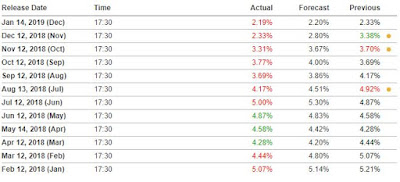
Summary: Significantly flattening yield curves coupled with extremely low inflation that is dampening business sentiment necessitates an aggressive cutting of interest rates in India in conjunction with other market friendly measures (scrapping LTCG and dividend tax on investments). However, the bogey of 'high core inflation' and 'weakening Indian Rupee (INR)' is raised by several analysts to argue against any rate cuts. I address both these concerns in the current blog post. It is my view that the current measure used to track core inflation is not accurately measuring the same. A " true core " inflation measure calculated by me shows that actual trend inflation is not only stable, but also likely well below current estimates. On the INR front, I believe that credit market stress in the USA will lead to a slowdown in Fed's belt-tightening plans causing the INR to be on a relatively stronger footing. There thus remains very little ground to postpone ...

An Absence of Euphoria

Image
The blog is just a broader write up of my tweet series that was quite well received.  One of the achievements of the Modi government has been the masterful control of inflation. While it can be argued that oil prices helped etc, these are more political arguments than substantive ones.   My concern however, is whether we have been too successful in inflation control, to the point where it has sapped joy from every day life. Yes, I am being facile but this is not way off the mark. There is a distinct absence of a "feel good" factor or euphoria from the economy that one witnesses around them. Even the political commentary from pro-BJP quarters seems to be increasingly data driven. The name of my blog is Eco political , and as such I cannot completely divorce politics from economics, and politics at the end of the day, is perception based. While I need not go into details how perception management allowed Congress to wrest three States from BJP recently, I ca...

Oil price, of bandhs & reality

Image
This post is spawned out of a twitter series I did a day earlier. Given the nature of the medium that is Twitter, a lot of information gets lost or misinterpreted. As such, I decided to lay out my thoughts in a detailed blog. The Congress party called for a Bandh (or stoppage of all work) in response to the rising fuel prices in India. While the call for bandh failed, it might make sense to look at what is driving the fuel price in India. The objection is that they why can the Government not reduce taxes on fuel, to bring down the price of petrol and diesel. For those who may not know, the taxes charged by central and state government account for about 35-50% of the price of petrol or diesel that the common man buys in retail. While actual mix may change based on several factors such as exchange rate, crude price etc, the charts below will give the reader a good approximation of what it looks like. Source: https://www.indiatoday.in/india/story/high-prices-of-petrol-and-...

Congress: Plugging a chasm with cello-tape

Image
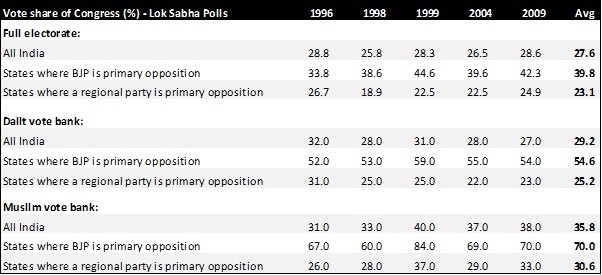
That Congress is a sole proprietorship has been made clear to us over decades, whether anecdotally or through various books authored by politicians/former bureaucrats/journalists. In fact in the recent Shahzad Poonawalla episode, a leaked tape suggests that Manish Tiwari referred to Congress as sole proprietorship in as many words. This has been achieved through the years allegedly by the subjugation of regional leadership by the ruling dynasty. The key goal being to centralize power in the dynasty's hands. The result of this has been the exodus by Congress stalwarts into other or new political outfits to pursue their own careers.  This page , lists over 40 breakaway parties (some of which may have merged back into Congress, or with other parties) from the Congress. Quite a dubious achievement for what calls itself as the Grand Old Party of India. The most notable break-away factions are Sharad Pawar’s Nationalist Congress Party, YS Jaganmohan Reddy’s YSR Congress, Mufti...